
We Examine. You Judge.
How to Handle a Fifth
THE BAR EXAMINER PRESENTS
Bar Science
Where we explore the STEM of bars, not just martini glasses.
Walk into almost any liquor store and you’ll encounter two familiar terms: a fifth and a handle.
One sounds like a fraction. The other sounds like something you’d find on a kitchen cabinet.
Naturally, we decided to investigate.
First, What’s a Fifth?
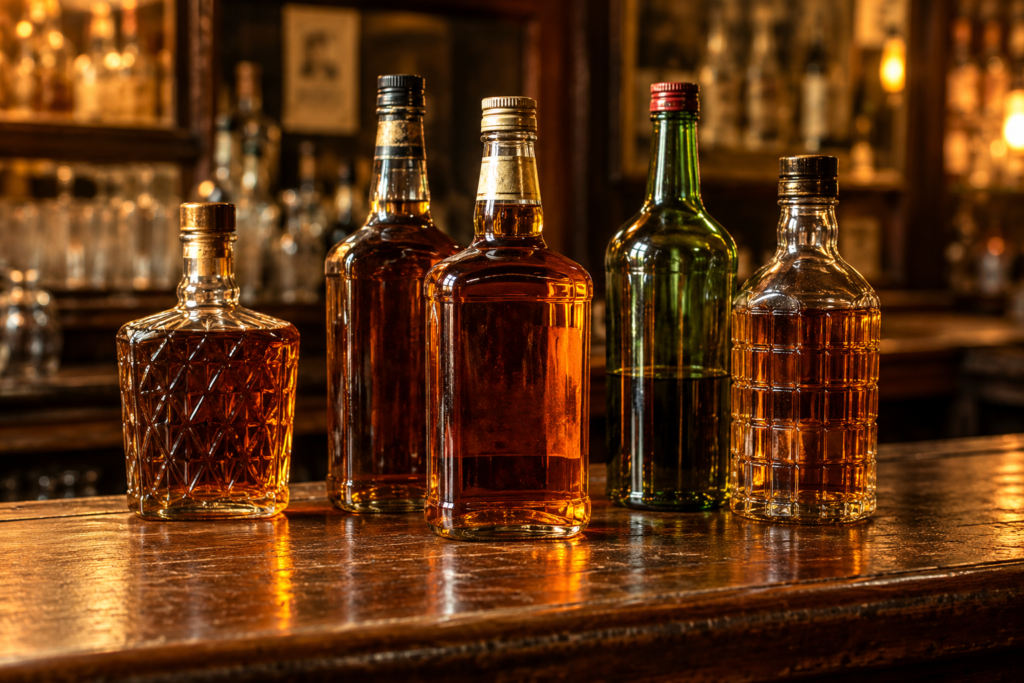
For generations, Americans have referred to a standard bottle of liquor as a “fifth.”
A fifth of what, exactly?
A gallon.
A U.S. gallon contains 128 fluid ounces. Divide that by five and you get 25.6 ounces, or approximately 757 milliliters.
For much of American history, one-fifth of a gallon was a standard quantity for selling distilled spirits.
So far, the math checks out.
Then Along Came the Metric System
In the 1970s, the United States began transitioning its liquor bottle standards to metric measurements.
By 1980, the familiar 750-milliliter bottle had become the standard replacement for the traditional fifth.
There’s just one small problem.
750 milliliters isn’t exactly one-fifth of a gallon.
It’s approximately 25.36 fluid ounces, slightly less than the original 25.6-ounce fifth.
But after decades of calling a bottle a fifth, Americans weren’t particularly interested in changing the name over a fraction of an ounce.
And so the fifth survived.
Not as an exact measurement, but as a familiar name for a familiar bottle.
A Fifth by Any Other Name
Today, a typical 750-milliliter bottle contains approximately 16.9 standard 1.5-ounce shots.
It’s the bottle you’ll commonly see behind a bar, on a liquor store shelf, or making a guest appearance at a holiday gathering.
Of course, sometimes 750 milliliters simply isn’t enough.
Which brings us to another familiar term.
Getting a Handle on Things
A handle is considerably larger than a fifth.
At 1.75 liters, it contains approximately 59.2 fluid ounces, or about 39 standard 1.5-ounce shots.
That’s more than twice the volume of a fifth.
But where did the name come from?
Having uncovered old gallons, federal standards, metric conversion, fractions, ounces, and nearly fifty years of bottling history, we naturally expected the term handle to require an equally detailed investigation.
A handle generally refers to a 1.75-liter bottle.
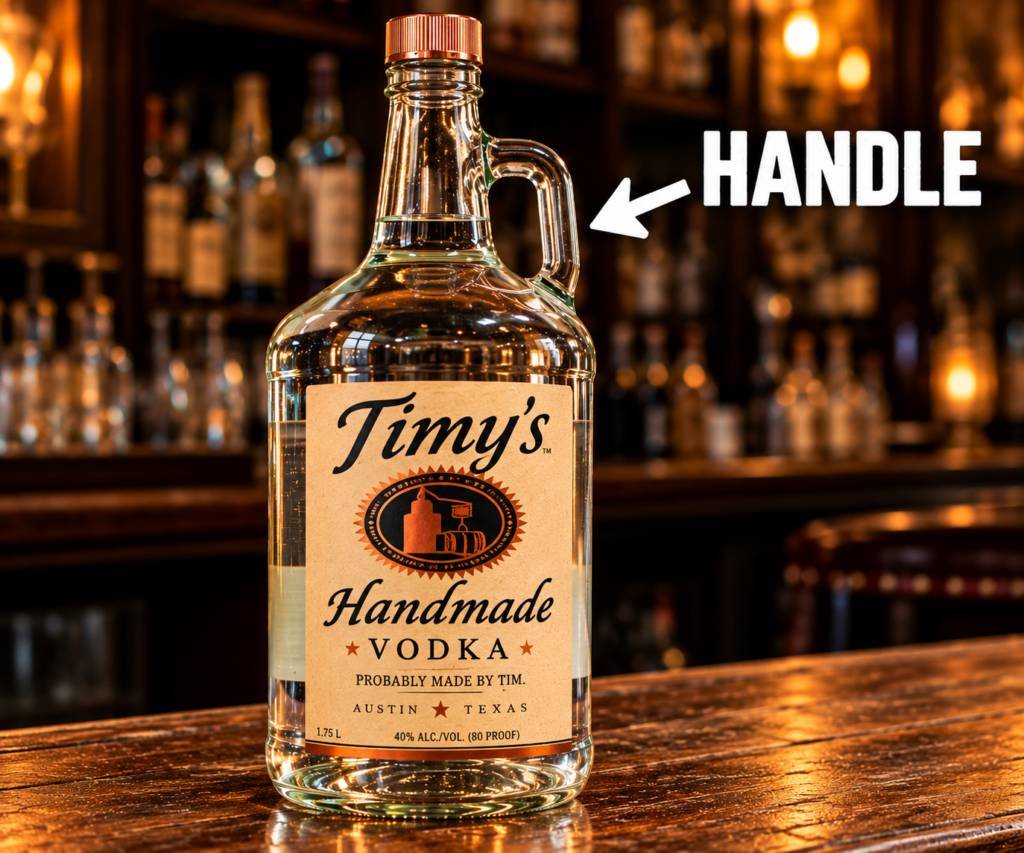
Why is it called a handle?
Because it has a handle.